
From Leaderboards to Workloads: A Practical View on Model Quality
Recent model launches are useful signals, but production remains the real test
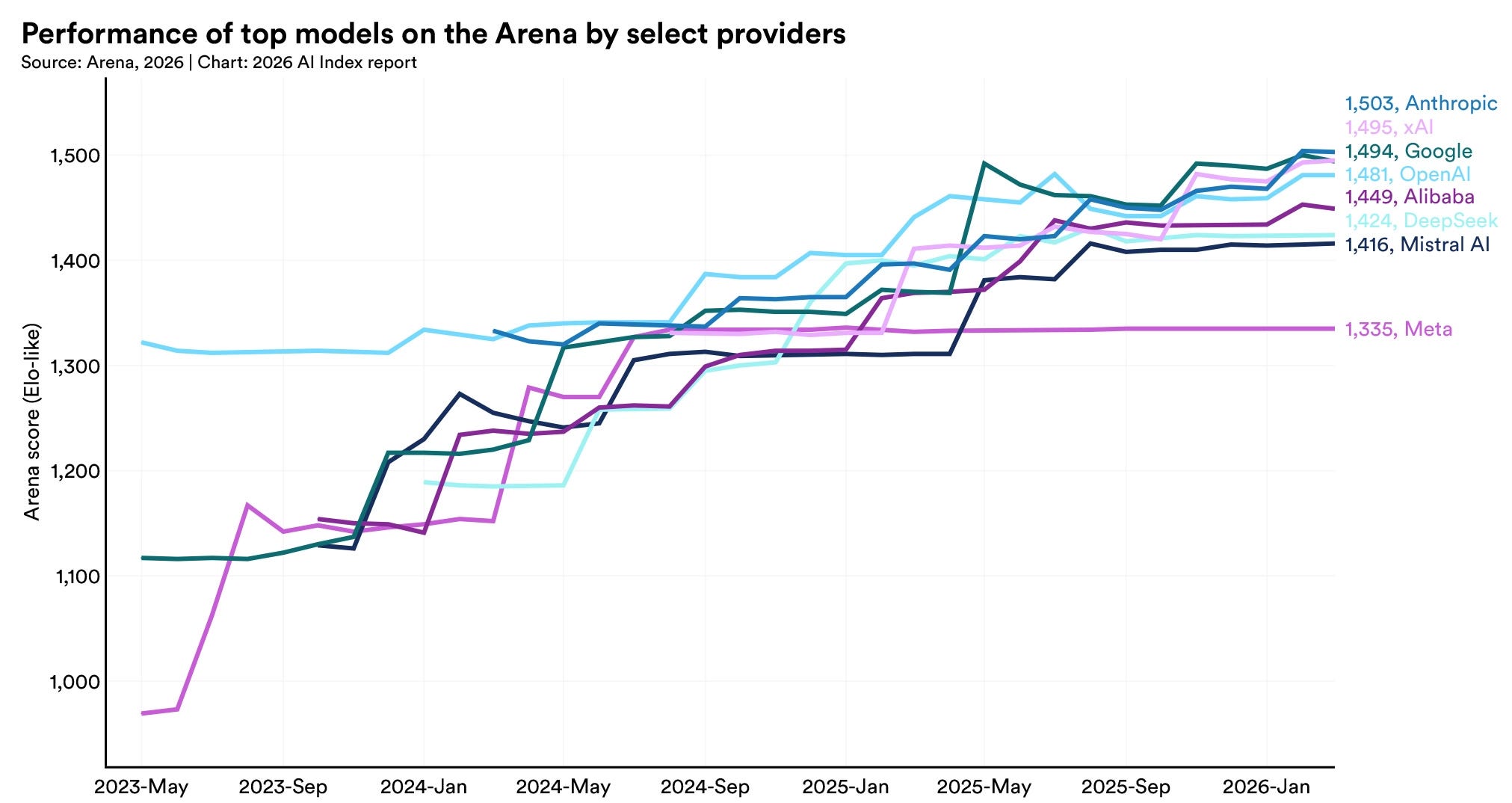
June 2026 has brought another round of notable model releases and infrastructure improvements, including Claude Opus 4.8, GPT-5.5 Instant, Gemini 3.5 Flash, and new performance claims around AI training efficiency. The pace of change is still impressive. Yet the underlying question for builders has not changed: which model is actually the right fit for the workload in front of you?
That distinction matters because leaderboard performance and production usefulness are related, but not identical. A model can perform well in a controlled evaluation and still be a poor choice for a real product if it is too slow, too expensive, or too inconsistent for the task.
Benchmarks are informative, but incomplete
Public benchmarks remain valuable. They help establish a broad sense of capability, and they make technical progress easier to compare. But they also flatten context. They reduce a model’s behavior to a single score, which is useful for visibility but limited for decision-making.
In practice, the best model on paper is not always the best model in production. A system that excels at reasoning may be unnecessary for a structured extraction task. A model with strong general performance may still struggle with domain-specific language. A highly capable model may also be too costly to run at scale.
This is why benchmark thinking can become misleading when it is used as the primary decision framework rather than one input among several.
Quality has to be defined in context
For product teams, the more important question is not “Which model is best?” but “What level of quality is sufficient for this workload?”
That framing is more useful because different tasks have different thresholds. A customer support assistant needs consistency and speed. A coding assistant needs accuracy and useful suggestions. A research workflow may tolerate slower responses if the model produces better synthesis. The right answer depends on the job, the user, and the operating environment.
In many cases, a smaller or mid-tier model is entirely adequate. If it is faster, cheaper, and more reliable for the task, it may be the better engineering choice even if it trails slightly on abstract benchmarks.
Workload-based evaluation is more practical
The most reliable way to choose a model is to test it against your own workload. That means using real prompts, real documents, and real user cases, then comparing outputs across multiple models.
A useful evaluation typically looks at four dimensions:
Quality: Does the model solve the task well enough?
Latency: Does it respond quickly enough for the user experience?
Cost: Is the model economical at the required volume?
Reliability: Does it behave consistently across repeated use?
Once those factors are measured together, the decision usually becomes clearer. In many products, the strongest architecture is not a single model everywhere, but a layered system: smaller models handling routine work, stronger models reserved for more difficult cases, and routing logic that decides when escalation is justified.
What this means for builders
For founders and developers, the practical implication is straightforward. Model choice should be guided by workload fit, not by public attention.
That usually leads to a few useful questions:
Which tasks in the product are genuinely high-stakes?
Which tasks are repetitive and predictable?
Where does latency materially affect user experience?
Where does cost shape the business model?
Could different models serve different parts of the workflow more effectively?
These questions often reveal that one model is not the right answer for everything. They also create room to design more resilient systems, with clear trade-offs rather than one oversized default.
A more durable way to think about progress
The current wave of releases is a reminder that model capability continues to improve. But for builders, progress is only meaningful when it translates into better outcomes in context.
That is exactly why the more useful lens is workload-based rather than leaderboard-based. The key question is not whether a model is marginally ahead in a public ranking. The key question is whether it helps users complete important tasks better, faster, and more consistently.


