

Microsoft Frontier, Palantir and Mercor: the new AI services playbook!

This week Microsoft announced Frontier Company: a $2.5B operating unit that will embed 6,000 engineers and industry specialists directly inside customers to design, deploy and continuously improve AI systems.
On paper it sounds like classic consulting. In practice it’s something different. a product company turning itself into a forward‑deployed AI engineering firm, at massive scale.

1. What Microsoft Frontier actually is
Microsoft says Frontier will “embed engineering, industry, and AI professionals directly into your organization” to co‑design and run AI systems tied to measurable business outcomes.
They’re not just selling Copilot licenses and hoping customers figure it out; they’re standing up embedded teams whose job is to make AI show up in KPIs, not slide decks.
It’s essentially a giant forward deployed engineering (FDE) org: engineers, architects and industry operators who live with the customer for months, but build on one opinionated stack—Microsoft’s own platforms.
2. This isn’t “just consulting”
If this sounds like Wipro, Infosys or TCS with a new coat of paint, look at the economics. Traditional IT services firms sell time and materials across many stacks, with most revenue coming from labor.
The Frontier model optimizes for something else:
Product‑led revenue, where embedded work makes Copilot, Azure and Fabric stickier and larger over time.
Outcome contracts, where success is measured in deployment speed, cost savings or revenue lift, not hours billed.
An opinionated AI platform, rather than building whatever the client asks for on any technology.
You can think of it as “services as a distribution and retention engine” for the product, not a standalone business line.
3. But, Palantir wrote this playbook first
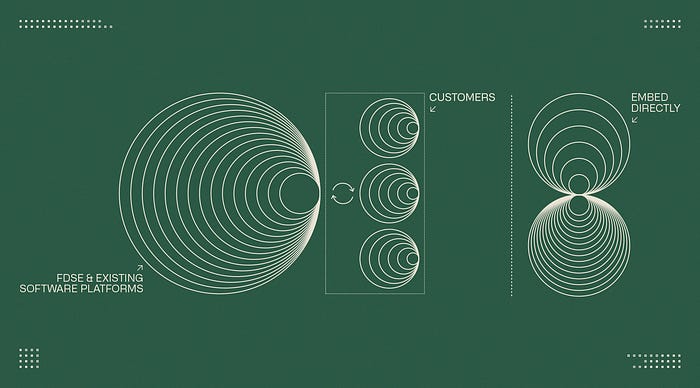
Palantir has been doing this for years. Their Forward Deployed Software Engineers move in with the customer, sit next to domain experts, and configure Palantir’s platforms (Gotham, Foundry, AIP) until they solve real operational problems..
Crucially, those engineers are not generic consultants.
They’re product engineers whose work becomes reusable modules that feed back into the core platform.
That’s how Palantir ends up with huge recurring software revenue while still looking, on the ground, like a consulting firm.
Frontier feels like Microsoft saying:
we want a Palantir‑style FDE org, but attached to the entire Microsoft AI stack.
4. Mercor is another marketplace variant
Mercor is another version of the same trend, coming from the labor side. It started as a hiring platform, but now its core business is supplying specialized experts for example lawyers, doctors, engineers, bankers etc, to train and evaluate AI models for big labs and enterprises.mercor+3
Instead of embedding one vendor‑aligned team, Mercor operates a network of domain specialists and routes them to whoever is paying for data, labels, and expert feedback.
The “product” is the marketplace and workflow tooling; the “services” are thousands of people doing knowledge work that turns into training data and evaluations.
In all three cases - Frontier, Palantir, & Mercor, the pattern is the same:
build a scalable product or network,
add deeply embedded humans to make it work in messy reality,
capture the upside as recurring platform or marketplace revenue.
5. What this means for small AI and deep‑tech founders?
For small AI or deep‑tech companies, this is the real lesson is that services are no longer a dirty word. they’re a deliberate part of the business model.
You don’t have to choose between “pure SaaS” and “consulting shop.” You can:
Ship a focused platform (for sensing, monitoring, infrastructure).
Deploy small forward‑deployed pods to live with customers for 3–6 months, integrating into their workflows and proving value on their P&L.
Feed everything you learn back into the product, so each engagement makes the platform easier to deploy next time.
Microsoft is now spending billions to copy a playbook that Palantir, and in a different way Mercor, have been refining for years.
If you’re building AI infrastructure in 2026, it might be time to stop asking “Are we a product company or a services company?” and start asking a more interesting question: